Green Cabbage Juice
Traditionally Used For
- Asthma
- Bladder Problems
- Lung Problems
- Colitis
- Constipation
- Hair Loss
- High Blood Pressure
- Kidneys
- Rejuvenator
- Skin Problems
- Thyroid Regulation
- Ulcers
A Good Source Of
- Chlorine
- Iodine
- Potassium
- Sulfur
- Vitamin B–6
- Vitamin C
- Vitamin U
Freshness Test
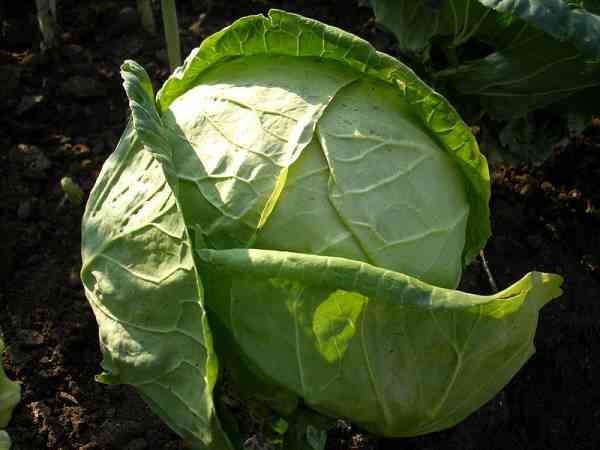
Looks for cabbages that are solid and heavy with good looking leaves that are full of color.
Important
Due to the fact that Cabbage is a green juice, you will find it beneficial to have no more than about ¼ of your juice consisting of green juice.
Cabbage can cause some people to experience an increase in gas. Cabbage can also cause people to experience some mild cramping in the intestines. This is due to the fact that Cabbage is high in sulfur. This sulfur reacts with bacteria inside the intestines causing this problem. If you notice this, then simply reduce the amount you have.
General
Cabbage is a cheap and readily available vegetable. It's very nutritious and much more nutritious when raw versus cooked. I personally prefer Red Cabbage as darker vegetables have more nutrients.
Chinese Herbal Information
Properties:
Energy: cold
5 Elements: water
5 Flavors: salty
General Information:
Nothing to report.
Cautions & Suggestions:
Nothing to report.
Benefits:
Nothing to report.
Herbal and Homeopathic Remedies That You Might Like
I have personally been using herbal and homeopathic remedies with great success since 1992. So like me, you might find that in addition to juicing, the following herbal and/or homeopathic remedies may be beneficial in helping you achieve greater and better health.
→ Don't see the right remedy for you? View a wide selection of more herbal and homeopathic remedies for various health concerns.
Picture of Green Cabbage
Sponsored Links
Cabbage (Green) — Nutritional Analysis
- Nutrient
- Units
- Value / 100 g
- Proximates
- Water
- g
- 92.15
- Energy
- kcal
- 25
- Energy
- kj
- 105
- Protein
- g
- 1.44
- Total lipid (fat)
- g
- 0.27
- Ash
- g
- 0.71
- Carbohydrate, by difference
- g
- 5.43
- Fiber, total dietary
- g
- 2.3
- Minerals
- Calcium, Ca
- mg
- 47
- Iron, Fe
- mg
- 0.59
- Magnesium, Mg
- mg
- 15
- Phosphorus, P
- mg
- 23
- Potassium, K
- mg
- 246
- Sodium, Na
- mg
- 18
- Zinc, Zn
- mg
- 0.18
- Copper, Cu
- mg
- 0.023
- Manganese, Mn
- mg
- 0.159
- Selenium, Se
- mcg
- 0.9
- Vitamins
- Vitamin C, total ascorbic acid
- mg
- 32.2
- Thiamin
- mg
- 0.050
- Riboflavin
- mg
- 0.040
- Niacin
- mg
- 0.300
- Pantothenic acid
- mg
- 0.140
- Vitamin B-6
- mg
- 0.096
- Folate, total
- mcg
- 43
- Folic acid
- mcg
- 0
- Folate, food
- mcg
- 43
- Folate, DFE
- mcg_DFE
- 43
- Vitamin B-12
- mcg
- 0.00
- Vitamin A, IU
- IU
- 133
- Retinol
- mcg
- 0
- Vitamin A, RAE
- mcg_RAE
- 7
- Vitamin E
- mg_ATE
- 0.105
- Amino Acids
- Tryptophan
- g
- 0.015
- Threonine
- g
- 0.049
- Isoleucine
- g
- 0.072
- Leucine
- g
- 0.073
- Lysine
- g
- 0.067
- Methionine
- g
- 0.014
- Cystine
- g
- 0.012
- Phenylalanine
- g
- 0.045
- Tyrosine
- g
- 0.024
- Valine
- g
- 0.061
- Arginine
- g
- 0.081
- Histidine
- g
- 0.029
- Alanine
- g
- 0.050
- Aspartic acid
- g
- 0.140
- Glutamic acid
- g
- 0.316
- Glycine
- g
- 0.032
- Proline
- g
- 0.279
- Serine
- g
- 0.083
Have you been wanting to do hatha yoga (stretching) but have found it either too difficult or you are not that flexible? If yes, and even if no, watch Jesse do some pure hatha yoga routines.
Unlike flow yoga
, each pose in pure or traditional hatha yoga is held for a few minutes. While holding the pose, you focus the mind on the stretch. When you focus the mind, that's when you find silence.
Jesse is not flexible — never has been and probably never will be flexible like others. But it doesn't matter. In pure hatha yoga, how flexible you are makes no difference. It's all about loving the pose and focussing the mind on the stretch.
If you want to learn pure hatha yoga, now you can by following Jesse on a series of hatha yoga routines.
Sponsored Links
Random Questions That Have Been Asked:
- Blanching vegetables before freezing
- Can I add Salba seeds to my juice?
- Juicing while pregnant and breastfeeding (nursing).
- How Much Nutrition Is In Pulp?
- How Can I Help Reverse Acne For My Son?
- Do you have a recipe that includes pears and beets?
- Does pickling remove the benefits?
- How important is a slow speed juicer compared to fast speed?
- What Do You Recommend for high blood pressure and high cholesterol?
- Juicing and Weight Loss