White Corn Juice
Traditionally Used For
- Carbohydrate Metabolism
- Constipation
- Generating New Cells
- Kidney Dysfunction
- Macular Degeneration
A Good Source Of
- Folate
- Pantothenic Acid (Vitamin B5)
- Thiamine (Vitamin B1)
- Vitamin C
Freshness Test
If you have ever picked corn right from the plant and eaten it, you will know how sweet and juicy fresh corn is. Many won't eat raw corn like this thinking it needs to be cooked to have flavor. I have to admit, I was like this too. But one day my mother convinced me to try her freshly picked corn — how fresh? Well, within seconds of being picked. At first I was hesistant but my mother began eating her corn and so I thought, why not?
So I ate the corn and was dumbfounded by the pure sweet flavor. I remember thinking to myself, why on earth would I ever buy corn again when it just doesn't compare to the freshly harvested?
So if you grow your own corn and then eat it immediately after picking, you will be amazed at how delicious the corn is. But after about 20 minutes, this sweet juiciness begins to disappear. So if you are buying the corn from the store, it will simply never be as fresh as corn picked and either juiced or eaten immediately. Ultimately, corn does not stay fresh long. If you are buying corn or even if you are picking your own corn, only pick or buy the corn on the day you plan to eat it or juice it. Next, to help ensure the corn is still somewhat fresh, I would never buy corn that has been husked.
Important
Although most vegetables that grow above ground are low or lower in sugar while most vegetables grown below ground are high or higher in sugar, corn is an exception to this rule. Corn, although grown above ground, is high in sugar. Do be careful when juicing corn that you do not spike your blood sugar level too high.
General
A lot of the corn on the market is genetically modified. I would personally suggest only buying organically grown corn. This way, you are guaranteed the corn is not genetically modified.
Boiling some corn silk in some water is said to be good for the kidneys.
Chinese Herbal Information
Properties:
Energy: neutral
5 Elements: earth
5 Flavors: sweet
General Information:
It has been said that regular consumption of corn can help to make the heart stronger and increase sexual capacities.
Corn silk is used in Chinese herbal medicine to promote urination, reducing internal heat, calming the liver, benefiting the gallbladder, nephritis, edema, beriberi, hypertension, gallstones, diabetes (lowers blood sugar), vomitting of blood, nosebleeds and jaundice–type hepatitis.
Cautions & Suggestions:
Nothing to report.
Benefits:
- Difficult Urination
- Large Intestine
- Stomach Tonic
- Weak Heart
Herbal and Homeopathic Remedies That You Might Like
I have personally been using herbal and homeopathic remedies with great success since 1992. So like me, you might find that in addition to juicing, the following herbal and/or homeopathic remedies may be beneficial in helping you achieve greater and better health.
→ Don't see the right remedy for you? View a wide selection of more herbal and homeopathic remedies for various health concerns.
- JointEase Plus
Helps maintain a healthy weight & balanced metabolism in children and preteens, plus assists slimming programs.
- Get Fit UltraPack
Homeopathic medicine AppetiteGo for excessive hunger, Homeopathic medicine Triple Complex Slimmer’s Assist for a healthy metabolism and Herbal supplement Detox Drops for healthy liver functioning.
- EcoSlim
Helps maintain a healthy weight & balanced metabolism, plus assists slimming programs.
- Fat2Fit
Natural remedy to boost metabolism, which helps lower body mass index.
Picture of White Corn
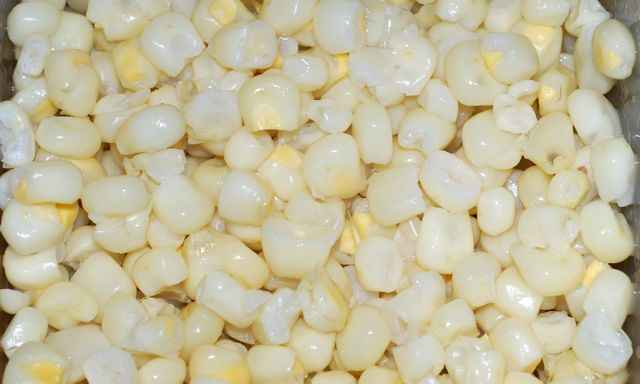
Photo by M. Chambers.
Sponsored Links
White Corn — Nutritional Analysis
- Nutrient
- Units
- Value / 100 g
- Proximates
- Water
- g
- 75.96
- Energy
- kcal
- 86
- Energy
- kJ
- 358
- Protein
- g
- 3.22
- Total lipid (fat)
- g
- 1.18
- Ash
- g
- 0.62
- Carbohydrate, by difference
- g
- 19.02
- Fiber, total dietary
- g
- 2.7
- Sugars, total
- g
- 3.22
- Minerals
- Calcium, Ca
- mg
- 2
- Iron, Fe
- mg
- 0.52
- Magnesium, Mg
- mg
- 37
- Phosphorus, P
- mg
- 89
- Potassium, K
- mg
- 270
- Sodium, Na
- mg
- 15
- Zinc, Zn
- mg
- 0.45
- Copper, Cu
- mg
- 0.054
- Manganese, Mn
- mg
- 0.161
- Selenium, Se
- mcg
- 0.6
- Vitamins
- Vitamin C, total ascorbic acid
- mg
- 6.8
- Thiamin
- mg
- 0.200
- Riboflavin
- mg
- 0.060
- Niacin
- mg
- 1.700
- Pantothenic acid
- mg
- 0.760
- Vitamin B-6
- mg
- 0.055
- Folate, total
- mcg
- 46
- Folic acid
- mcg
- 0
- Folate, food
- mcg
- 46
- Folate, DFE
- mcg_DFE
- 46
- Vitamin B-12
- mcg
- 0.00
- Vitamin A, RAE
- mcg_RAE
- 0
- Retinol
- mcg
- 0
- Carotene, beta
- mcg
- 1
- Carotene, alpha
- mcg
- 0
- Cryptoxanthin, beta
- mcg
- 0
- Vitamin A, IU
- IU
- 1
- Lycopene
- mcg
- 0
- Lutein + zeaxanthin
- mcg
- 34
- Vitamin E (alpha-tocopherol)
- mg
- 0.07
- Vitamin K (phylloquinone)
- mcg
- 0.3
- Lipids
- Fatty acids, total saturated
- g
- 0.182
- 16:0
- g
- 0.171
- 18:0
- g
- 0.011
- Fatty acids, total monounsaturated
- g
- 0.347
- 18:1 undifferentiated
- g
- 0.347
- Fatty acids, total polyunsaturated
- g
- 0.559
- 18:2 undifferentiated
- g
- 0.542
- 18:3 undifferentiated
- g
- 0.016
- Cholesterol
- mg
- 0
- Amino acids
- Tryptophan
- g
- 0.023
- Threonine
- g
- 0.129
- Isoleucine
- g
- 0.129
- Leucine
- g
- 0.348
- Lysine
- g
- 0.137
- Methionine
- g
- 0.067
- Cystine
- g
- 0.026
- Phenylalanine
- g
- 0.150
- Tyrosine
- g
- 0.123
- Valine
- g
- 0.185
- Arginine
- g
- 0.131
- Histidine
- g
- 0.089
- Alanine
- g
- 0.295
- Aspartic acid
- g
- 0.244
- Glutamic acid
- g
- 0.636
- Glycine
- g
- 0.127
- Proline
- g
- 0.292
- Serine
- g
- 0.153
- Other
- Alcohol, ethyl
- g
- 0.0
- Caffeine
- mg
- 0
- Theobromine
- mg
- 0
Have you been wanting to do hatha yoga (stretching) but have found it either too difficult or you are not that flexible? If yes, and even if no, watch Jesse do some pure hatha yoga routines.
Unlike flow yoga
, each pose in pure or traditional hatha yoga is held for a few minutes. While holding the pose, you focus the mind on the stretch. When you focus the mind, that's when you find silence.
Jesse is not flexible — never has been and probably never will be flexible like others. But it doesn't matter. In pure hatha yoga, how flexible you are makes no difference. It's all about loving the pose and focussing the mind on the stretch.
If you want to learn pure hatha yoga, now you can by following Jesse on a series of hatha yoga routines.
Sponsored Links
Random Questions That Have Been Asked:
- What can help with my hemorrhoids, fissures and inflammation?
- What is your take on juice fasting?
- How often should I juice to get enough nutrition?
- Which Juices Would Be Good For Depression?
- Hypoglycemia, General Detox and Colds
- Is a pint of juice too much?
- Can I drink more than 1/2 pint (1 cup) of juice per day?
- Should some vegetables be cooked before juicing?
- Is It Okay To Mix Apples With Vegetable Juice?
- Is Eating Whole Fruit Okay Even Though It Is High In Sugar?